Moving materials across an outdoor jobsite is often more difficult than it looks. Gravel roads, muddy ground, slopes and unfinished access routes can make ordinary transport equipment less convenient to use. When materials need to be moved repeatedly between different working areas, a vehicle designed for rough ground can help make the process faster and easier to manage.
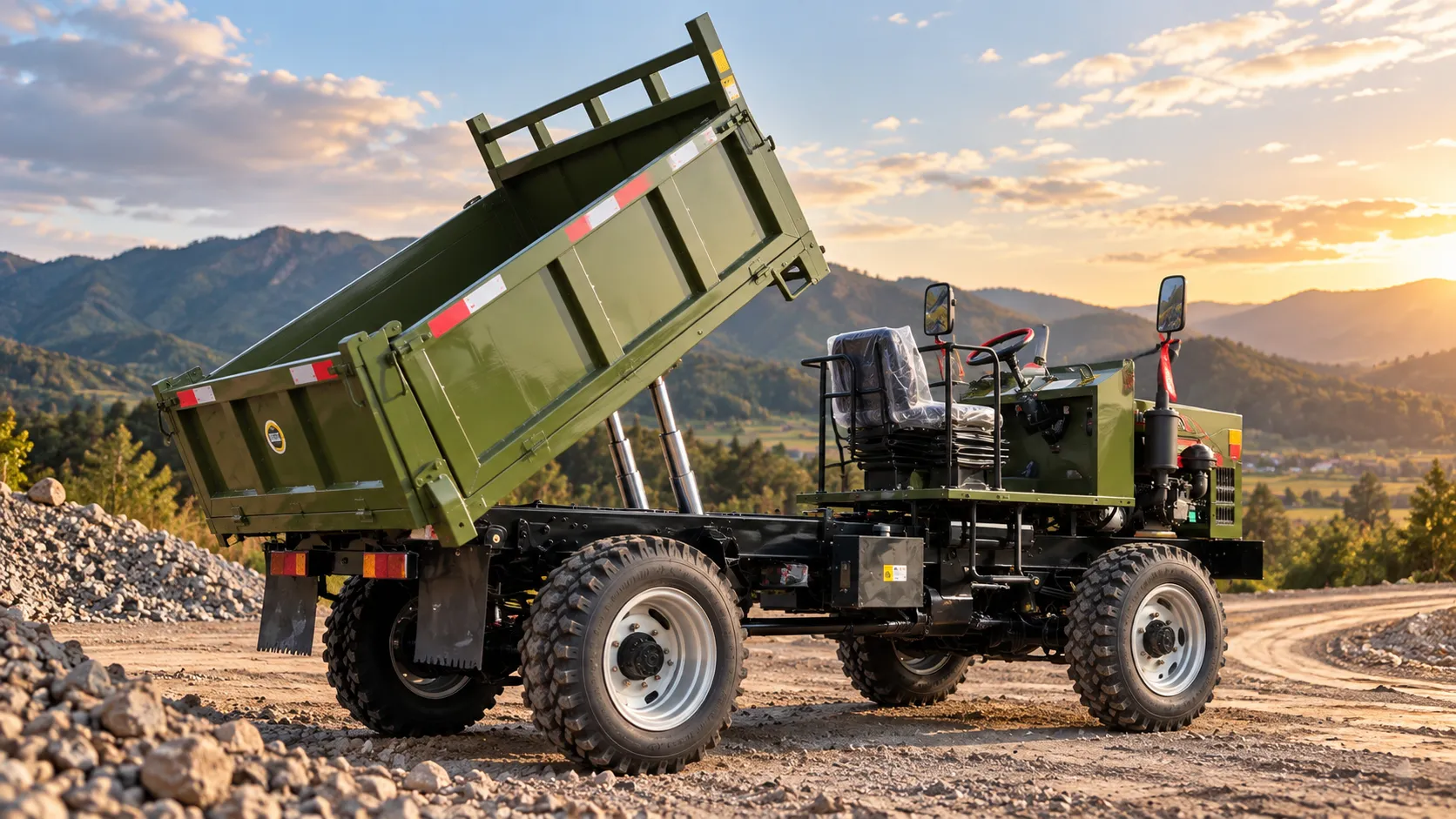
Four-wheel drive transport vehicles are mainly used for short-distance material transportation in demanding outdoor environments. Their structure is suitable for jobs where materials need to be carried across uneven ground, including construction sites, farms, mountain areas, material yards and other outdoor working locations.
Depending on the job, these vehicles can transport soil, sand, stone, tools, agricultural materials and other bulk loads. A tipping cargo bed can also make unloading easier, reducing the amount of manual work required when materials arrive at the destination.
For example, on a construction site, the vehicle can move materials between storage areas and active work zones. On farms or rural land, it can carry supplies through areas where standard road vehicles may be less practical. In mountain or outdoor projects, its compact structure can also be useful where access roads are narrow or unfinished.
Choosing the right transport vehicle should begin with the actual working conditions. Buyers should consider the type of material being transported, road conditions, terrain, loading requirements, available space and how frequently the vehicle will operate.
The value of this type of equipment comes from making repeated transport work more efficient. Instead of relying heavily on manual handling or unsuitable road vehicles, businesses can use a machine designed around the real conditions of the jobsite.
For outdoor projects that involve frequent material movement, a suitable four-wheel drive transport vehicle can help reduce transport time, simplify unloading and keep daily work moving more smoothly.